Aside from the longer days, warmer weather, and ability to spend more time in nature, one of the best things about spring is the return of our favourite fruits and vegetables. Some of the best produce is harvested in spring, with the season bringing with it an abundance of asparagus, strawberries, blueberries, cauliflower, fennel, okra, and watermelon.
Eating a diet rich in fruits and vegetables is one of the best ways to ensure you and your family are getting enough necessary micronutrients, such as vitamin C from strawberries and kiwi fruits, vitamin K from asparagus, and potassium from bananas. However, regardless of whether you’re getting your fresh produce from the supermarket or the farmer’s market, washing them properly is key to guaranteeing your fruit and vegetable consumption is benefiting—rather than hindering—your health.
While most people are aware of the adverse health effects of raw or improperly cooked meat and fish, many make the assumption that fresh produce is free from these hazards. However, according to the World Health Organisation (WHO), one in 10 people get sick eating unsafe food, with the Centre for Disease Control (CDC) finding that fruits and vegetables account for 46% of these foodborne illnesses.
Dr. Primrose Freestone, a biochemist and associate professor in clinical microbiology in the department of respiratory sciences at the University of Leicester, notes that as fresh produce is grown in the open, it’s susceptible to contact from insects and birds and can contain bacterial, fungi, and viruses, in addition to dirt and pesticides. “Fresh produce may also become contaminated during packaging, preparation or storage,” Dr. Freestone writes in an article for The Conversation. “Even produce grown in greenhouses hydroponically can still harbour germs and pesticides.”
With that in mind, adequately washing your fresh produce is important to not only benefit from their nutrient content, but prevent illnesses. Here’s the best way to wash your fruits and vegetables.
How to wash your fruits and vegetables
Most of us are familiar with rinsing your fresh produce by hand, under cool running water. It’s important to remember to wash your own hands first to prevent germs and bacteria on your skin from contaminating the food you’re washing. Then, use your hands to rub the fruits and vegetables, removing any visible dirt and impurities.
Simply rinsing your produce is a good way to remove visible surface-level impurities, however it doesn’t always remove residual waxes (such as those added to apples and pears to prevent moisture loss and make them look more appealing to consumers), pesticides, germs, and bacteria.
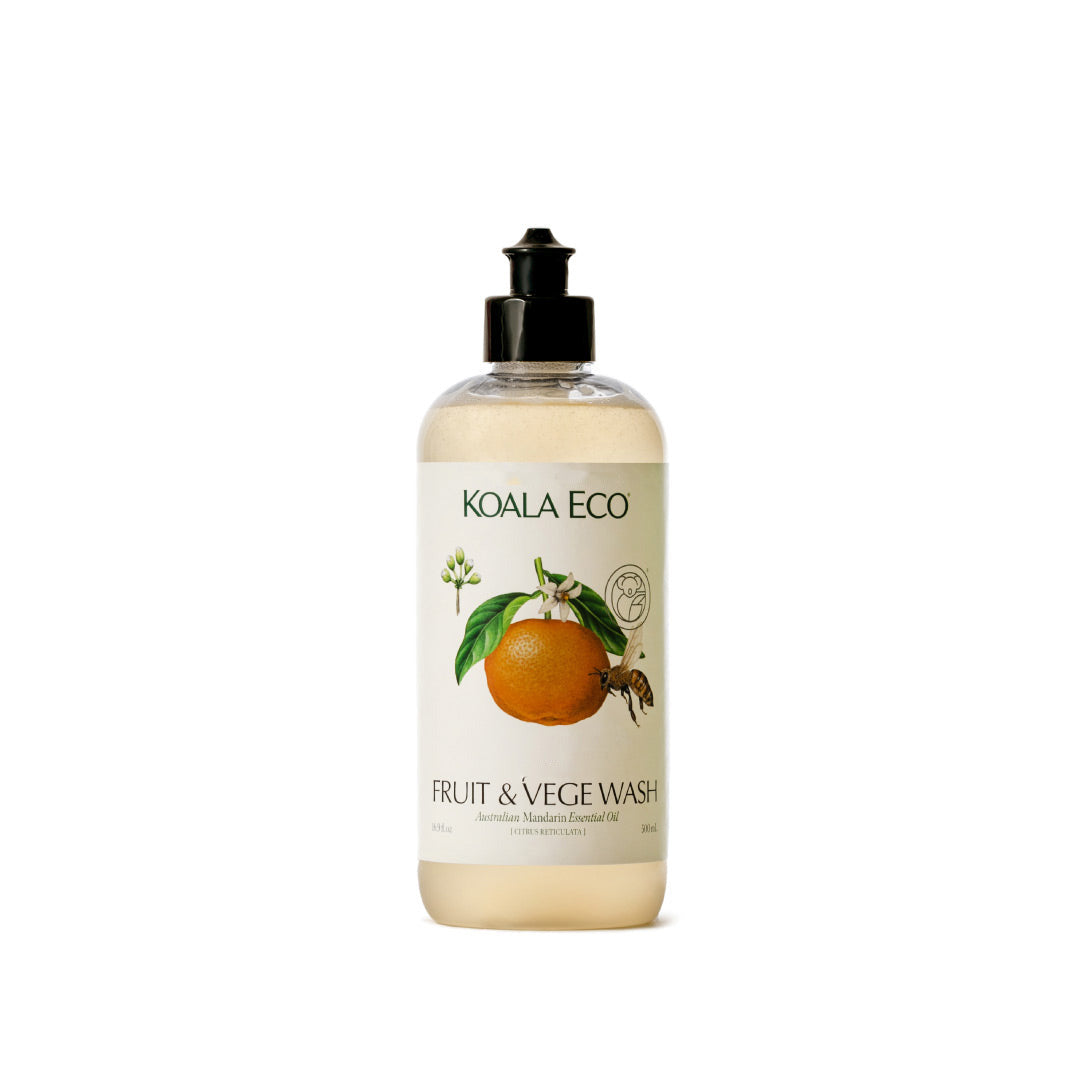
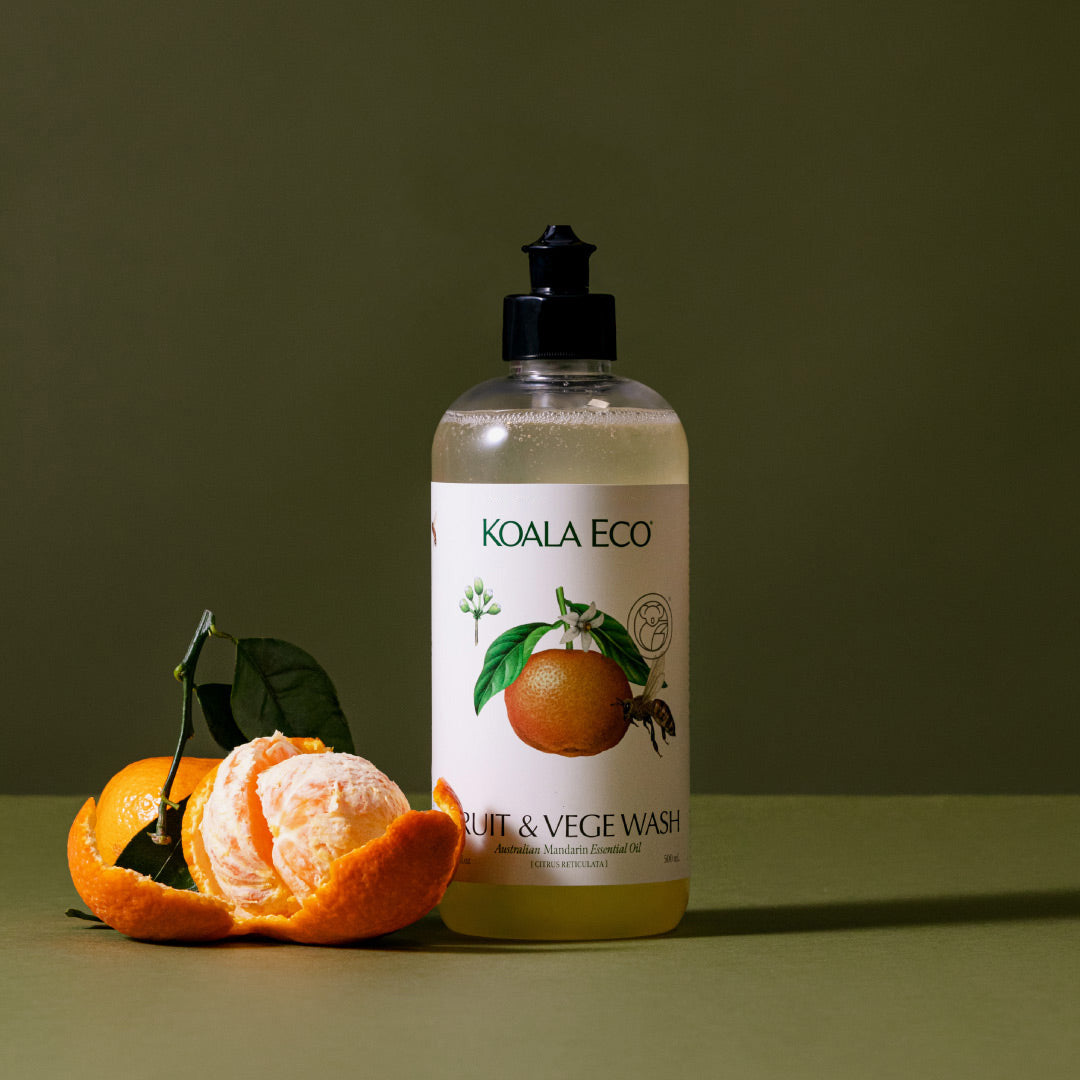
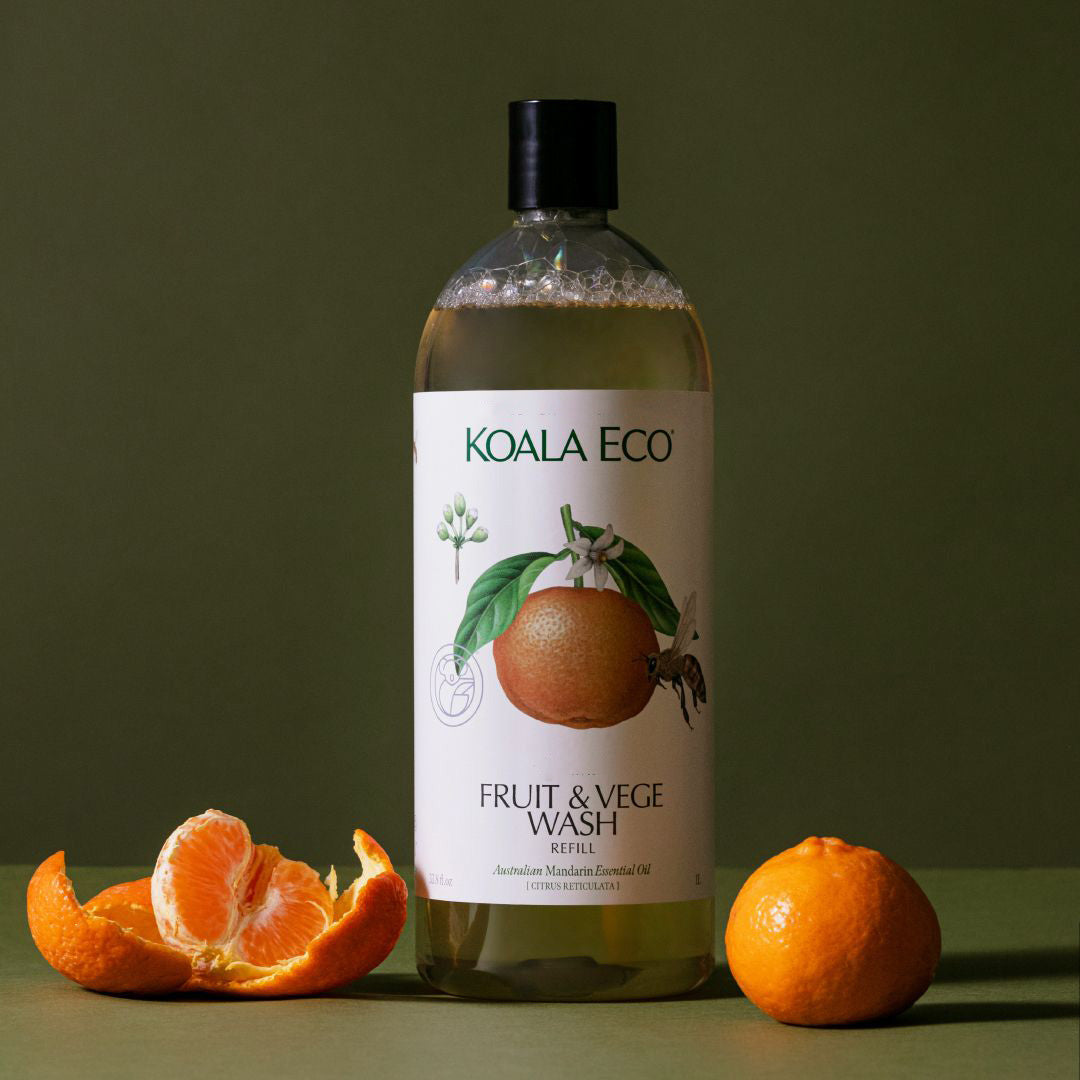
Opt for a dedicated food-safe formula like our Koala Eco Natural Fruit & Vege Wash. Designed to let you enjoy your fresh produce the way nature intended, our Natural Fruit & Vege Wash safely and effectively removes agricultural pesticides, oils, waxes, and chemicals, as well as germs from your fruits and vegetables without leaving any aftertaste behind. In this regard, it’s superior to washing methods like baking soda or vinegar, which can degrade the skin of delicate fruits and vegetables and seep into the produce, altering its taste and texture.
Our Natural Fruit & Vege wash is made with mandarin essential oil, citric acid, and plant-based surfactants. These biodegradable, food-safe ingredients combine to create a formula that creates a gentle lather, attracting and lifting oils, waxes, chemicals, pesticides, and other impurities off your produce.
To use, simply add half a capful to a large bowl of cold water (avoid washing produce directly in the sink unless this has been thoroughly cleaned prior to use) and wash your fruits and vegetables before rinsing clean under cold water. Delicate produce such as leafy greens (including spinach, broccoli, cauliflower, and kale) and berries can be soaked for five minutes before rinsing (don’t rub these, as it can break down the produce). Hardier produce with a firm skin like potatoes and melons should be given a more thorough scrub with our Bamboo Scrubbing Brush. Meanwhile, produce like apples, eggplants, capsicums, and pears which often have a wax coating should be gently scrubbed; the abrasion helps remove this wax.
Most fruits and vegetables can be washed in bulk and dried before being stored until ready for use. However, Dr. Freestone explains that fruits with a high water content, including grapes, cherries, and berries are more perishable than hardier produce like cucumbers, potatoes, apples, and citrus fruits. “Wetting berries will increase the growth of any germs present and reduce their shelf life,” she notes, adding that “it’s best to store these unwashed in the fridge, only washing when you’re ready to eat them.”